Most drivers only think about their car battery when the engine refuses to start and the morning suddenly feels a lot shorter.
The good news is that checking your battery at home is easier than many people expect. With a bit of know-how, you can spot early warning signs long before they turn into a stressful breakdown.
Think of it as giving your car a mini checkup, the same way you would check your phone battery before a road trip.
Start with the Basics
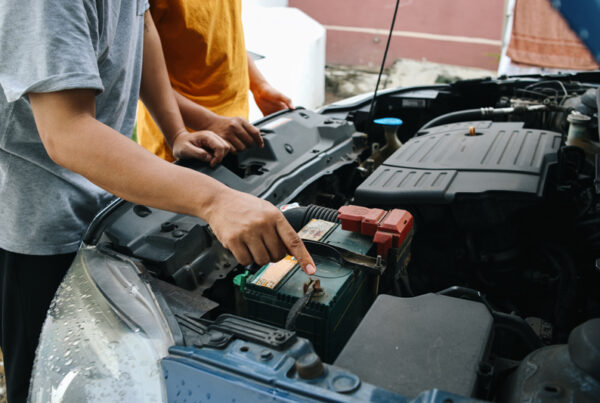
Before you touch anything, take a moment to look at the battery. A quick visual inspection can tell you plenty.
If the case looks swollen, if you see dried white residue around the terminals, or if the battery’s top appears grimy, your battery is trying to tell you something.
Dirt and corrosion make it harder for electrical current to flow smoothly through the system, increasing strain and potentially shortening the battery’s life.
A clean, dry battery is happy. A crusty one is begging for attention.
You can safely wipe the battery with a clean cloth, and if you see any white or green build-up on the terminals, gently brush it off.
Just make sure the car is off, and the keys are out of the ignition.
Check How The Car Behaves When You Start It
Your car gives you little clues about its battery health every time you turn the key or press the start button. If the starter motor sounds lazy or uneven, the battery could be low on charge.
Key signs include dashboard flickering, resetting, or dimming during startup; this indicates the battery might be struggling to deliver enough power.
Even modern stop-start vehicles, which are designed to preserve energy, rely heavily on battery performance. If the system becomes inconsistent or stops working entirely, it is often because the battery cannot maintain the required voltage levels.
Use A Multimeter For A Quick At-Home Reading
If you want a clearer idea of what is happening inside your battery, a multimeter is your secret weapon. It is one of the simplest tools you can buy, and it tells you exactly how much voltage your battery is producing.
Turn the car off, set the multimeter to DC volts, and place the probes on the positive and negative terminals.
A healthy, fully charged car battery should read above 12.6 volts.
Anything below 12.6V could indicate a flat battery requiring charging, or a battery that is busy failing.
If you take a reading after the car has been standing overnight, you will get the most accurate picture of its resting voltage.
After driving, the battery’s reading might be slightly higher due to the alternator’s recent charging.
Pay Attention To Bad Smells Or Unusual Heat
A battery that overheats or emits a rotten egg smell needs professional attention.
These signs point to potential overcharging which is not something to handle at home.
If anything smells strange or feels unusually warm, step away and let a Willard Xpress technician take over.
Know When To Call In The Experts
Home checks give you a good sense of how your battery is doing, but a professional diagnostic at a Willard Xpress Battery Centre goes much deeper.
If your readings are low, the car hesitates during startup, or the battery is older than 3 to 5 years, a visit to your nearest Willard Xpress centre can save you a world of inconvenience.
The team will test your battery for free, fit a new one if needed, and give you the right advice for your driving habits and vehicle type.