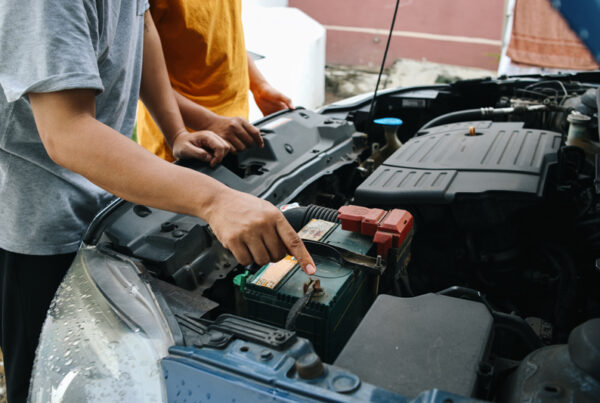
Fleet management is an incredibly stressful industry. After all, many forget it’s more than just keeping wheels on the road.
Individuals involved in the sector can confirm that being involved with fleet management encompasses a range of responsibilities, including managing delivery vans, heavy-duty trucks, licensing, driver management, and more.
However, amongst all these elements, your fleet’s batteries are the silent workhorses powering every start-up, light, and onboard system.
Poor fleet battery management can lead to costly downtime, delayed schedules, and unexpected maintenance bills.
However, with a clear strategy, you can extend battery life, reduce costs, and keep your vehicles running smoothly.
Why Battery Management Matters in Fleet Operations
Fleet managers already juggle fuel efficiency, driver safety, and maintenance schedules.
Batteries, however, are often overlooked until failure strikes. South Africa’s demanding climate, ranging from cold mornings to scorching afternoons, places your vehicle’s battery under huge amounts of stress.
Even when a single vehicle goes down due to poor battery management, the knock-on effects include:
- Missing delivery schedules, resulting in unhappy clients
- Costly emergency call-outs or replacements of batteries
- Lower productivity of the fleet due to missing-in-action vehicles
- And ruining your brand’s reputation for being reliable
By implementing a planned schedule for battery testing, you can avoid most of the highlighted issues above.
So, what are the key battery metrics you need to track?
Key Battery Metrics to Track
Understanding the numbers behind battery performance will help you make better replacement and maintenance decisions. Here are a few battery metrics you can test.
Cold Cranking Amps (CCA)
Many conductance testers can only measure Cold Crank Amps (CCA), which arguably is the only stat you need to know.
CCA measures how well a battery can start an engine in icy conditions. Typically, batteries are tested at –18°C to indicate the number of amps a battery can deliver for 30 seconds while maintaining at least 7.2 volts.
While it might seem unlikely for anywhere in South Africa to be this temperature, cold winter mornings in high-altitude regions (Johannesburg, Free State, Drakensberg) can push batteries to their limits.
A weak CCA rating means slow or failed starts, lost productivity, and frustrated drivers.
When selecting a battery for your fleet, always choose a CCA that matches or exceeds manufacturer recommendations.
What other elements should you be aware of when managing your fleet’s batteries? Or what else can you test for it if you have an advanced conductance tester?
Reserve Capacity (RC)
RC shows how long a fully charged battery can supply 25 amps at 26.7°C before the voltage drops too low to power essential systems.
In layman’s terms, this indicates how long your vehicle can keep lights, ignition, and electronics running if the alternator fails.
With modern vehicles being packed with electronics, from GPS to refrigeration units, a strong RC rating ensures operations don’t grind to a halt if the alternator goes down temporarily.
Performing this type of test will require more specialised equipment.
Ampere-hour (Ah) Rating
Ah indicates the total amount of energy a battery can deliver over a set period (usually 20 hours at 25°C).
For example, a 100Ah battery can provide five amps for 20 hours.
Many fleet vehicles can be equipped with auxiliary equipment, such as refrigeration, liftgates, or onboard diagnostics, which can all draw more continuous power.
A higher Ah rating ensures these systems keep running without draining the battery too quickly.
Cycle Life
Cycle life is the number of times a battery can be fully charged and discharged before its capacity drops (commonly measured until it holds only 80% of its original capacity).
Vehicles with frequent stop-start patterns (urban delivery vans, taxis, ride-share cars) put constant stress on batteries. A longer cycle life directly translates to fewer replacements and lower costs.
You can’t test a battery for the number of life cycles its been through, but its something to be aware of.
For high stop-start operations, consider AGM or EFB batteries, which are built for hundreds to thousands of cycles.
Now that we know what to look for when purchasing batteries for your fleet, what best practices should you adopt?
Best Practices for Fleet Battery Management
Overseeing a fleet’s battery can be done efficiently by adopting these habits:
Regular Testing and Inspections
Purchasing multimeters or professional diagnostic tools to test voltage and CCA is far easier than it used to be. Most of these diagnostic tools can be purchased through online outlets.
These devices are easy to use and will help you spot signs of deterioration before failures occur.
Also, even a simple visual inspection can help spot issues with your fleet’s batteries. Common visual issues that you can spot on a car’s battery are corrosion on the terminals or fraying cables.
Scheduled Maintenance
It’s always a good idea to schedule regular checks of your fleet’s terminals for corrosion. Also, ensuring that cables are tight and clean is essential.
Invest in Quality Batteries
Nothing is worse than investing in a poor-quality product that lives up to its price tag.
Always choose locally manufactured, SABS-approved batteries that comply with international standards.
Also, look for warranties that support long-term reliability.
Implement a Fleet Battery Policy
Standardise battery types across your fleet for easier replacements. Also, by following this standardisation route, you can track the fleet’s performance in a centralised fleet management method.
Cost of Poor Battery Management
As you can imagine, letting your fleet’s battery issues slide can have hidden financial consequences:
- Emergency roadside call-outs in South Africa can cost R1,500+ per incident.
- A stranded delivery truck can lose thousands in missed contracts or penalties.
- Premature battery replacements add avoidable expenses—especially when quality batteries can last 3–5 years with proper care.
If you’re in the market to standardise your fleet’s batteries, why not contact one of our many stockists or visit one of our Willard Xpress stores in person?